
General Risk Assessment Services in Bracknell
We deliver specialist risk assessment expertise to support Bracknell businesses in fulfilling their legal obligations whilst upholding exceptional workplace safety standards.
We additionally provide comprehensive advice on establishing robust control measures and creating safe working systems to safeguard your employees and guarantee adherence to the Management of Health and Safety at Work Regulations 1999.

General Risk Assessment Bracknell Enquiry Form


General Risk Assessment Services in Bracknell
Risk assessments represent a fundamental element of workplace safety, required under the Management of Health and Safety at Work Regulations 1999. Organisations must legally recognise hazards and evaluate risks to safeguard employee health and safety throughout work operations.
Nevertheless, securing compliance presents challenges for Bracknell enterprises across all sectors and scales.
At HSQE Consultancy, we streamline risk assessment procedures, providing forward-thinking support to guarantee your Bracknell workplace exceeds legal requirements whilst maintaining outstanding safety standards. Our qualified health and safety specialists work alongside you to address the intricacies of risk management, supplying customised approaches that safeguard your personnel and uphold compliance.
From comprehending statutory duties to recognising hazards and establishing robust control measures, we support Bracknell businesses throughout the entire journey.
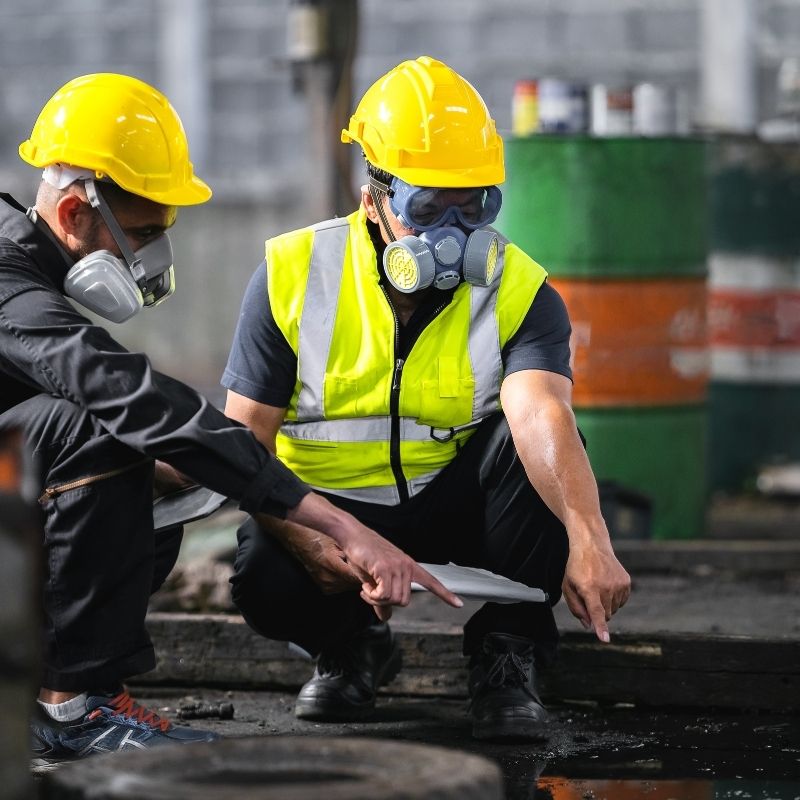
General Risk Assessment Consultancy in Bracknell
At HSQE Consultancy, our risk assessment provision for Bracknell businesses is structured to both simplify compliance and enhance workplace safety to outstanding levels.
A committed specialist will work with you to comprehensively recognise hazards, evaluate related risks, and establish practical, robust control measures. This encompasses an in-depth examination of your Bracknell business environment, working systems, and operational procedures to guarantee all possible risks receive thorough attention.
We deliver complete assistance, maintaining your awareness regarding statutory responsibilities and the actions required to satisfy them. Our specialists provide customised recommendations to support your Bracknell organisation in managing risks successfully whilst cultivating a safety-focused culture.
Contact The Bracknell Team

Why Invest in Bracknell Risk Assessment Services?
Investing in specialist risk assessment provision guarantees not only adherence to health and safety legislation but also promotes a safer, more productive workplace in Bracknell.
HSQE Consultancy delivers exceptional expertise, with specialists possessing over 35 years of collective experience throughout varied sectors including rail, construction, and power.
Through partnership with us, you can reduce potential dangers, diminish incidents, and establish a culture of safety within your Bracknell operations.

Our General Risk Assessment Locations
Click Here To See Our Full List Of Our General Risk Assessment Locations
Enterprise Centre, 14-40 Victoria Rd, Aldershot GU11 1TQ
Email: info@hsqeconsultancy.co.uk
Phone: 01252 214075
Frequently Asked Questions About General Risk Assessment in Bracknell
This sector involves chemical processes, cleanroom environments, high-voltage equipment, and specialist gases that each carry distinct hazards requiring specific controls. A generic assessment template is unlikely to cover the actual risk profile adequately, and the assessment should address each process and area separately with input from people who understand the technical environment.
A qualitative assessment uses descriptive categories such as low, medium, and high to evaluate likelihood and severity, which is the approach used in most commercial workplaces. A quantitative assessment assigns numerical probabilities to outcomes, and is typically used in highly regulated industries such as nuclear, chemical, or rail where a precise measure of risk is required. Most businesses will only ever need a qualitative approach.
Compressed gas cylinders carry risks from stored energy, leaks of toxic or flammable gases, and the physical hazard of a falling or damaged cylinder. The assessment should cover storage arrangements, handling procedures, leak detection, and the controls needed for any process where compressed gases are used, including the arrangements for emergency response if a significant leak occurs.
Poor ventilation, chemical off-gassing from furniture and cleaning products, and biological contaminants such as mould can all affect the health of people working in a building over time. The assessment should consider ventilation adequacy, the cleaning and maintenance regime, and any specific substances introduced into the workspace through work activities, particularly in buildings with sealed windows or limited natural airflow.
Residual risk is the level of risk that remains after all reasonable control measures have been applied. It should be explicitly recorded in the assessment rather than left implied, since this confirms that the risk has been evaluated after controls rather than before them, and that the responsible person has made a considered judgement that the remaining level of risk is acceptable. Where residual risk is judged to be higher than tolerable, additional controls must be sought.
The Health and Safety (Display Screen Equipment) Regulations require employers to assess the workstation setup of regular DSE users and address risks including musculoskeletal problems, eye strain, and fatigue. The assessment should cover the desk, chair, monitor, keyboard, and lighting, and should also consider working patterns including the frequency and duration of rest breaks. Workers who report symptoms such as back pain or headaches related to their work should prompt a review of their individual workstation assessment.
Any significant new equipment that introduces hazards not covered by the existing assessment, whether a new machine, a new vehicle, or new IT infrastructure, should trigger a review of the relevant parts of the assessment before the equipment is put into use. Waiting until the next scheduled review cycle to assess risks that are already present in the workplace is not consistent with the duty to maintain a current and valid assessment.
Where contractors need access to areas of a premises that carry specific hazards, the risk assessment should identify the controls needed to manage that access safely, including site induction requirements, escort arrangements, access restrictions, and the information the contractor needs about site-specific hazards before they enter. The assessment should not assume that a contractor's own risk assessment covers hazards that originate from the host site rather than the contractor's own work.
The Health and Safety (First Aid) Regulations require employers to provide adequate first aid provision, and the risk assessment plays a direct role in determining what is adequate for a particular workplace. A low-risk office with a small number of employees will have different first aid requirements from a manufacturing site with machinery and hazardous substances, and the assessment findings should inform the number of first aiders, the contents of first aid kits, and the proximity of first aid facilities to the areas of highest risk.
When a building is being occupied in phases, with some areas in use while others are still being fitted out or renovated, the risk profile of the occupied areas is affected by the construction activity nearby. The risk assessment for the occupied areas should be reviewed before each new phase begins to identify any additional hazards introduced by the works, and the boundary controls between occupied and construction areas should be explicitly confirmed as adequate in the assessment.
Responsible business frameworks increasingly look at how organisations manage their duty of care to workers as part of a broader governance assessment. A business that can demonstrate thorough, current, and well-communicated risk assessments is providing evidence of responsible people management that supports applications for sustainability accreditations, investment-readiness assessments, and supply chain approval processes where governance quality is evaluated alongside financial and environmental performance.
Science and technology parks in the Bracknell and east Berkshire area host a diverse mix of tenants whose activities can range from software development to laboratory research, each carrying different risk profiles in close proximity. Individual tenants are responsible for their own assessments, but the park management's assessment for shared areas needs to reflect the combined risk environment of the whole park rather than being based on any single occupier's activities. Businesses in laboratory or research settings should ensure their assessments address the specific substances and processes in use rather than applying a generic office standard.