

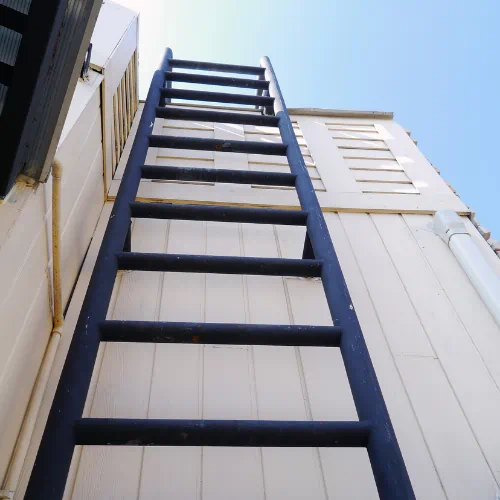
Ladders are one of the most commonly used pieces of equipment across workplaces in the UK, yet they are also one of the most frequently misused and poorly maintained. Understanding how often ladders should be visually inspected is not just good practice; it is a legal and safety obligation that every employer and worker needs to take seriously.
How Often Should Ladders Be Inspected?
The short answer is: before every single use. A pre-use check takes no more than a minute, yet it can be the difference between a safe working day and a life-changing accident. The Health and Safety Executive (HSE) recommends that all ladders are subject to a quick visual check each time they are taken out for use, looking for obvious defects such as cracked stiles, bent rungs, damaged feet, or any visible corrosion.
Beyond the daily pre-use check, ladders should also undergo a more detailed formal inspection at regular intervals, typically every one to three months depending on the frequency of use and working environment. A ladder used daily on a busy construction site requires more frequent thorough inspection than one stored in a warehouse and used occasionally. Keeping a log of these inspections is strongly advisable, both for compliance purposes and to identify any patterns of wear that might indicate a broader equipment management issue.n ladder on a worksite could expose an employer or worker to significant legal liability.
Need a Ladder Inspection? Talk with one of our Ladder Inspection professionals today!

How Often Must Ladders Be Visually Inspected?
Legally speaking, the frequency of visual inspections is shaped by the Work at Height Regulations 2005, which place a duty on employers to ensure that all equipment used for working at height is properly maintained and inspected. There is no single prescribed interval written into law that applies universally; instead, the regulations require that inspection frequency be determined through risk assessment, taking into account the type of ladder, how often it is used, and the conditions it is exposed to.
In practical terms, most health and safety professionals recommend a formal visual inspection at least every three months as a baseline, with pre-use checks carried out every time the ladder is used. For ladders used in particularly harsh environments, such as those exposed to chemicals, extreme weather, or heavy physical impact, more frequent formal checks are not just advisable but expected. Employers are responsible for ensuring those checks are documented and that any ladder failing inspection is taken out of service immediately.
| Inspection Type | Recommended Frequency | Who Should Carry It Out |
|---|---|---|
| Pre-use visual check | Before every use | The ladder user |
| Interim detailed inspection | Every 1 to 3 months | Competent person |
| Formal recorded inspection | At least every 6 months | Trained inspector or competent person |
| Post-incident inspection | Immediately after any incident | Competent person |
Are Ladders Covered by LOLER?
This is one of the most frequently misunderstood areas of ladder safety legislation in the UK. LOLER, the Lifting Operations and Lifting Equipment Regulations 1998, does not apply to ladders in the traditional sense because ladders are not classified as lifting equipment; they are access equipment. The relevant legislation for ladders falls primarily under PUWER, the Provision and Use of Work Equipment Regulations 1998, alongside the Work at Height Regulations 2005.
PUWER requires that all work equipment, including ladders, is maintained in an efficient state and in good repair. This means inspections, maintenance records, and ensuring that only suitable ladders are used for specific tasks all fall under the employer’s legal duty of care. It is worth reading the full guidance from the Health and Safety Executive at www.hse.gov.uk to understand how these regulations intersect and what specific obligations apply to your workplace.
Ladder Inspection Checklist: What to Look For
A visual inspection is only as effective as the person carrying it out knows what they are looking for. Both stiles (the vertical side rails) and rungs must be checked for cracks, bends, splits, and corrosion, as any structural compromise can cause catastrophic failure under load. The feet of the ladder deserve particular attention, as worn or missing anti-slip feet are a leading contributor to ladder-related accidents.
Locking mechanisms on extension ladders, platform stability on stepladders, and the condition of any rope or pulley systems should all be included in the inspection process. The ladder should also be checked for any contamination such as oil, mud, or paint that could reduce grip or conceal underlying damage. According to the Ladder Association, a competent person carrying out inspections should have sufficient knowledge and experience to identify defects and understand their significance in terms of continued safe use.
| Ladder Component | What to Check | Action if Defective |
|---|---|---|
| Stiles | Cracks, bends, corrosion | Remove from service immediately |
| Rungs | Bending, looseness, missing rungs | Remove from service immediately |
| Feet | Wear, missing anti-slip pads | Replace feet or remove from service |
| Locking mechanisms | Free movement, full engagement | Do not use until repaired |
| Surface condition | Oil, paint, mud contamination | Clean thoroughly before use |
| Labels and markings | Legibility, weight rating visible | Replace label or remove from service |
For further guidance on managing inspection records and risk assessments in the workplace, the UK Government’s workplace health and safety portal provides useful resources at https://www.gov.uk/topic/health-safety/working-at-heights.
Should Ladders Be Checked Every Month?
Monthly checks are a reasonable and widely adopted standard for many workplaces, but whether they are sufficient depends entirely on how the ladder is being used. A ladder stored in a dry, clean environment and used infrequently may be perfectly safe with monthly detailed checks supplemented by pre-use visual inspections. However, a ladder used across multiple shifts in an outdoor or industrial environment really should be subject to a more rigorous inspection schedule.
The key principle is that inspection frequency should be proportionate to risk. Employers who carry out proper risk assessments under the Management of Health and Safety at Work Regulations 1999 will find that their assessment naturally points towards how often formal checks are needed. If in doubt, the guidance from the Health and Safety Executive at https://www.hse.gov.uk/work-at-height/ladders.htm provides a solid framework for establishing a compliant and effective inspection regime.hands and a foot, or two feet and a hand, in proper contact throughout.
Want a Ladder Inspection? Speak to one of our Ladder Inspection Experts
How Often Should Ladders Be Visually Inspected: A Summary for UK Workplaces
Getting ladder inspection right is not about ticking boxes; it is about creating a culture where safety is genuinely embedded into everyday working practice. Every worker who picks up a ladder should understand that a quick check before use is non-negotiable, and every employer should have a documented system in place that captures formal inspections and removes defective equipment from circulation without delay. When that culture exists, the risk of ladder-related injury drops significantly.
The regulatory framework in the UK is clear in its intent, even if it does not prescribe a single universal frequency. The Work at Height Regulations 2005 and PUWER together create a robust duty of care that places responsibility firmly on employers to assess risk and respond accordingly. Inspections should be carried out by someone competent to identify defects, and records should be kept in a format that can be reviewed during audits or investigations.
Ladders may seem straightforward, but the consequences of overlooking their condition can be severe. Falls from height remain one of the leading causes of workplace fatality in the UK, and a significant proportion of those incidents involve ladders that were damaged, incorrectly used, or not inspected. Taking inspection seriously is one of the most impactful things a business can do to protect its people.
How Often Should Ladders Be Visually Inspected: Frequently Asked Questions
A ladder should receive a basic visual check before every use, regardless of how recently it was last used. A formal, documented inspection should also be carried out at least every one to three months by a competent person.
A pre-use check involves looking over the stiles, rungs, feet, and any locking or pulley mechanisms for visible damage, corrosion, or contamination. It takes only a minute or two and should become second nature for any worker using a ladder regularly.
The Work at Height Regulations 2005 require that equipment used for working at height is inspected at suitable intervals, with frequency determined by risk assessment rather than a single fixed legal interval. Employers must document these inspections and ensure defective equipment is removed from service.
A competent person is someone with sufficient knowledge, training, and experience to identify defects and understand their implications for safe use. This does not necessarily require a formal qualification, but the person must genuinely understand what they are looking for.
No, ladders are not covered by LOLER because they are classified as access equipment rather than lifting equipment. They fall under PUWER and the Work at Height Regulations 2005 instead. For a full overview of what LOLER covers, visit the LOLER Wikipedia page.
Monthly checks are good practice even for infrequently used ladders, as storage conditions can cause deterioration that is not immediately obvious. Rubber feet can perish, corrosion can develop, and fixings can loosen even without active use.
Any ladder that fails an inspection should be taken out of service immediately and clearly labelled or tagged to prevent use until it has been repaired or replaced. It should never simply be put back into the storeroom without action.
Yes, extension ladders, stepladders, and leaning ladders each have different components that require specific attention, and high-use or site-based ladders will naturally require more frequent inspection than those used occasionally indoors. The environment and conditions of use are the primary factors in determining frequency.
Keeping records is strongly recommended and may be required during HSE inspections or legal proceedings following an incident. A simple logbook or digital record noting the date, inspector, findings, and any actions taken is entirely sufficient.
Worn or missing anti-slip feet are frequently overlooked despite being one of the most common causes of ladder slippage at ground level. Inspectors should always check the condition of feet carefully, particularly on ladders used outdoors or on smooth flooring.
Under the Health and Safety at Work etc. Act 1974, employees have the right to refuse work they reasonably believe poses a serious risk of injury, and this includes using defective equipment. Employers cannot penalise an employee for raising a legitimate safety concern about a ladder.
Ladders used in harsh environments such as construction sites, chemical plants, or outdoor settings are exposed to conditions that accelerate wear and corrosion, requiring more frequent checks. A risk assessment should take the working environment into full account when setting inspection intervals.
The Construction (Design and Management) Regulations 2015 place additional duties on those managing construction projects to ensure health and safety is properly managed, which includes equipment maintenance and inspection. The Health and Safety Executive provides sector-specific guidance for construction at https://www.hse.gov.uk/construction/index.htm.
The Ladder Association offers formal ladder inspection and safety training courses that are widely recognised across UK industries. Completing accredited training ensures your designated competent persons have the knowledge and confidence to carry out thorough and reliable inspections.