

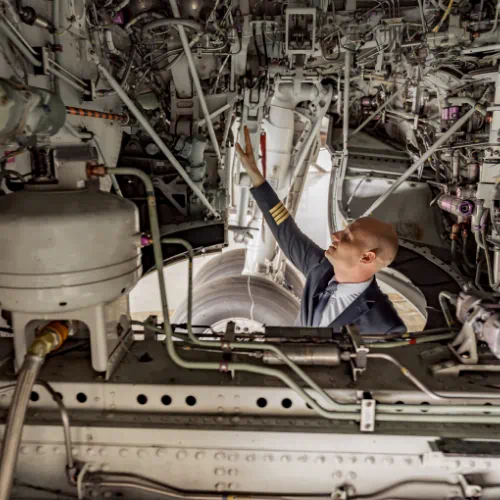
If you manage a workplace where lifting equipment or work machinery is in regular use, understanding your legal inspection obligations is not optional. Failing to meet those obligations can result in serious injury, enforcement action from the Health and Safety Executive (HSE), and significant financial liability. This guide breaks down exactly how often equipment must be inspected, what the law requires, and how to stay compliant.
Is LOLER 6 Months or 12 Months? Understanding the Inspection Intervals
One of the most common points of confusion for duty holders is whether LOLER inspections are required every six months or every 12 months. The answer depends on what the equipment is used for.
Under the Lifting Operations and Lifting Equipment Regulations 1998 (LOLER), lifting equipment used to lift people must be thoroughly examined at least every six months. Lifting equipment used solely for lifting loads, and not people, must be examined at least every 12 months, unless it is subject to conditions that would deteriorate the equipment more rapidly, in which case more frequent inspection may be required. Both timeframes are legal minimums, not targets.no person could be raised or lowered by it, the requirement drops to every twelve months, provided no specific examination scheme shortens that period. You can find the full regulatory detail on the Health and Safety Executive’s LOLER guidance page.
Need some LOLER Support? Speak with a member of our Professional LOLER Team here

How Often Should You Inspect Equipment in the Workplace?
Beyond LOLER, the frequency of equipment inspection across a workplace is also governed by the Provision and Use of Work Equipment Regulations 1998 (PUWER). PUWER does not prescribe a single fixed interval for all equipment; instead, it requires that inspection frequency is determined by risk assessment, manufacturer guidance, and the conditions in which the equipment operates.
As a practical benchmark, most general work equipment should be visually checked before each use by the operator, with a more formal documented inspection carried out at regular intervals. High-risk equipment in demanding environments may warrant monthly or quarterly inspections, whilst lower-risk office equipment might only require an annual review. The key principle under PUWER is that the inspection regime must be suitable and sufficient for the specific equipment and its working context.
How Often Should Work Equipment Be Inspected Under Specific Risk Conditions?
| Equipment Type | Minimum Inspection Frequency | Applicable Regulation |
|---|---|---|
| Lifting equipment (people) | Every 6 months | LOLER 1998 |
| Lifting equipment (loads only) | Every 12 months | LOLER 1998 |
| Pressure vessels | As per written scheme of examination | PSSR 2000 |
| General work equipment (high risk) | Risk assessment dependent (often quarterly) | PUWER 1998 |
| General work equipment (low risk) | Risk assessment dependent (often annually) | PUWER 1998 |
| Portable electrical appliances (PAT) | Risk assessment dependent | Electricity at Work Regs 1989 |
The table above illustrates that there is no single universal inspection interval that applies across all equipment types. Each category carries its own regulatory framework and each workplace must assess its obligations accordingly.
Ignoring these distinctions is where many businesses find themselves on the wrong side of the HSE. A single missed inspection for a piece of lifting equipment used to raise personnel can constitute a criminal offence under LOLER. Documented, scheduled inspections are not simply good practice; they are a legal requirement.y a qualified and competent person. The government guidance on electrical safety standards for landlords provides the full regulatory framework.
How Often Should Equipment Be Inspected Under LOLER?
LOLER applies to a broad range of lifting equipment, including fork-lift trucks, cranes, hoists, vehicle tail lifts, patient hoists in healthcare settings, and even window cleaning cradles. Each of these must be subject to a thorough examination carried out by a competent person, defined as someone with the necessary practical and theoretical knowledge and experience.
The thorough examination under LOLER is not the same as a routine visual check. It is a detailed, structured assessment of the equipment’s condition, safety systems, and operational integrity, and must be recorded in a written report. You can find full guidance on LOLER requirements on the Health and Safety Executive’s LOLER page, which outlines the legal duties of those who own, operate, or control lifting equipment in the workplace.
LOLER Inspection Frequency: A Breakdown by Equipment Category
| Equipment Category | Inspection Interval | Notes |
|---|---|---|
| Personnel lifting equipment | Every 6 months | Legal minimum under LOLER |
| Load-bearing lifting equipment | Every 12 months | Legal minimum under LOLER |
| Accessories for lifting (slings, chains, hooks) | Every 6 months | Treated same as personnel equipment |
| Equipment with increased deterioration risk | More frequently than above | Based on competent person assessment |
| New equipment (post-installation) | Before first use | Mandatory pre-use examination |
| Equipment after exceptional circumstances | Immediately following incident | Required before returning to service |
This breakdown makes clear that lifting accessories such as slings, shackles, and chains are treated under the same six-month rule as equipment used to lift people. Many businesses underestimate this and treat accessories as exempt from the formal thorough examination regime.
The consequences of under-inspecting accessories can be severe. A failed chain or a worn sling is just as capable of causing a fatality as a faulty hoist mechanism. Competent employers build lifting accessories into their LOLER examination schedules from the outset, treating them with the same rigour as the primary lifting equipment itself.
For additional guidance on workplace equipment obligations, the UK Government’s Health and Safety at Work guidance provides a comprehensive overview of employer duties across all sectors.
If your business operates any form of lifting equipment and you are unsure whether your current inspection schedule meets the legal standard, the HSE’s work equipment and machinery guidance is a practical starting point for reviewing compliance.
How Often Must Equipment Be Inspected: What Every Employer Needs to Know
Understanding how often equipment must be inspected is ultimately about more than just ticking a compliance box. It is about building a workplace culture where the integrity of every piece of equipment is treated as a matter of serious responsibility, because it is.
The legal framework governing inspection frequency, primarily LOLER and PUWER, is designed to ensure that equipment failure does not become the cause of preventable injury or death. Both sets of regulations make clear that inspection frequency must be proportionate to risk, guided by competent professionals, and documented in a way that creates a clear audit trail. No business is too small to be exempt from these obligations, and no equipment is too insignificant to escape the scope of the relevant regulations.
If your current inspection regime was last reviewed when you first bought your equipment, it is almost certainly overdue for a reassessment. Equipment ages, operating conditions change, and the competent persons responsible for examinations must take all of this into account when setting and reviewing inspection schedules. Compliance is not a one-time event; it is an ongoing commitment to the safety of everyone in your workplace.
How Often Must Equipment Be Inspected: Frequently Asked Questions
The legal minimum is every six months for lifting equipment used to lift people, and every 12 months for equipment used solely to lift loads. These intervals are minimums, and a competent person may recommend more frequent inspections based on the risk environment.
A thorough examination is a detailed assessment of the lifting equipment’s condition, safety components, and operational fitness, carried out by a competent person. It goes well beyond a basic visual check and must result in a formal written report.
A competent person must have sufficient practical and theoretical knowledge and experience of the lifting equipment in question to be able to detect defects and assess their significance. In practice, this is often an independent engineer or a specialist from an accredited inspection body.
Yes, LOLER applies to any business that uses lifting equipment in connection with work activities, regardless of the size of the organisation. There are no exemptions based on company size or turnover.
Lifting accessories include items such as slings, chains, hooks, shackles, and eyebolts used in conjunction with lifting equipment. They are subject to the same six-month thorough examination requirement as equipment used to lift people.
If a defect is identified that poses an imminent risk to people, the competent person is legally required to notify both the duty holder and the relevant enforcing authority without delay. The equipment must be taken out of service until the defect has been rectified.
Yes, LOLER requires that lifting equipment is thoroughly examined before it is used for the first time in a workplace, unless the manufacturer can provide an EC Declaration of Conformity that is no older than 12 months. For more background on LOLER, the Wikipedia page on LOLER provides a useful overview.
PUWER covers all work equipment broadly and requires inspections to be based on risk assessment rather than fixed statutory intervals. LOLER is more prescriptive and applies specifically to lifting equipment, setting defined minimum examination frequencies that must be met regardless of risk assessment conclusions.
No, operator pre-use checks are a separate layer of safety practice and do not fulfil the requirement for a thorough examination under LOLER. The thorough examination must be conducted by an independent competent person and formally recorded.
The competent person must produce a written report containing specified information, including the date of examination, details of any defects found, and a declaration that the equipment is safe to use. These records must be retained and made available to the HSE upon request.
An employer can act as the competent person if they genuinely have the required knowledge and experience, but in most cases this is not recommended. Independent inspection provides greater objectivity and ensures the examination is not influenced by operational or commercial pressures.
LOLER requires that lifting equipment be thoroughly examined following any exceptional circumstance that might have affected its safe operation, including accidents, near-misses, or significant overloading events. The equipment must not be returned to service until the examination has been completed and it has been confirmed as safe.
Yes, inspection and maintenance are distinct obligations. Maintenance involves keeping equipment in working order, whilst a thorough examination is a formal safety assessment of the equipment’s fitness for continued use. Both are required, but neither substitutes for the other.
The Health and Safety Executive is the primary regulatory body responsible for LOLER and PUWER compliance in Great Britain, and their guidance is available at hse.gov.uk. For broader health and safety duties, the UK Government’s health and safety guidance provides a solid regulatory overview.