

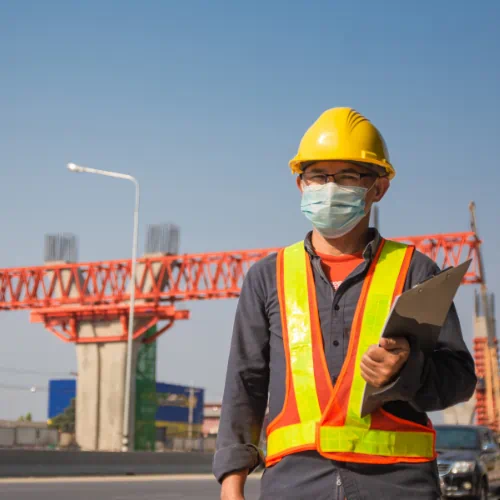
Face fit testing is a topic that stirs genuine debate in workplaces across the UK, particularly in industries where respiratory protective equipment (RPE) forms part of daily safety protocols. Whether you are an employee being asked to undergo testing for the first time, or an employer trying to understand your legal obligations, the question of refusal sits at an interesting crossroads of employment law, health and safety regulation, and individual rights.
Is Face Fit Testing Mandatory in UK Workplaces?
Face fit testing is not simply a box-ticking exercise. Under the Control of Substances Hazardous to Health Regulations 2002 (COSHH) and the Personal Protective Equipment at Work Regulations, employers in the UK are legally required to ensure that any tight-fitting RPE worn by employees provides an adequate seal. The Health and Safety Executive (HSE) makes clear that a face fit test is the only reliable way to confirm this, meaning that in environments where tight-fitting masks are required, testing becomes a legal necessity rather than a recommendation.
For employees, this means that if your role requires you to wear a tight-fitting facepiece, such as a half-mask respirator or a filtering facepiece (FFP3), your employer has a legal duty to ensure it fits correctly before you use it. You can read more about the regulatory framework on the HSE’s face fit testing guidance page, which outlines both employer responsibilities and the standards testing must meet.

Need Support? Take a look at our Face Fit Testing Experts today!
Can You Be Forced to Wear a Face Mask at Work?
This is where the distinction between legal obligation and personal choice becomes particularly important. If your employer has carried out a risk assessment and determined that RPE is necessary to protect your health, refusing to wear the required equipment could put you in breach of your employment contract and your duties under the Health and Safety at Work Act 1974. Employees are legally required to cooperate with their employer’s health and safety measures and to use protective equipment provided.
That said, there are legitimate reasons why someone may struggle with a particular mask, including claustrophobia, a medical condition, or simply the fact that a specific model does not fit their facial structure. In these cases, the appropriate route is not outright refusal but open dialogue with your employer to explore alternative RPE options or accommodations, rather than declining the process altogether.
How Often Should a Person Be Face Fit Tested Each Year?
| Trigger for Retesting | Recommended Action |
|---|---|
| Change in RPE model or type | Retest immediately before use |
| Significant change in facial structure | Retest as soon as possible |
| Substantial weight gain or loss | Arrange a new test |
| Dental work affecting facial shape | Retest before returning to RPE use |
| Routine periodic review | At least every two years (industry guidance) |
| Following a period of extended absence | Retest recommended before return to RPE duties |
There is no single statutory requirement that mandates annual retesting in every case, but guidance from the HSE and the British Safety Industry Federation (BSIF) indicates that face fit tests should be repeated whenever circumstances change. These circumstances include a significant change in body weight, facial surgery or dental work that alters the shape of the face, or a switch to a different make or model of RPE.
In practice, many employers adopt a periodic retesting schedule, often every two years, as part of a broader health and safety management programme. The key principle is that the test result must remain valid and representative of the worker’s current facial characteristics and their actual working equipment.
Need Help? Talk to our Professionals now!
What Happens If You Fail a Mask Fit Test?
Failing a mask fit test does not mean you are permanently unable to wear RPE. It most commonly means that the particular facepiece being tested does not create an adequate seal with your face, which could be due to the shape of the mask, facial hair, or structural facial features. The immediate practical outcome is that you should not use that specific piece of RPE in a hazardous environment until a suitable alternative has been identified and tested.
Your employer’s next step should be to source a different model or size of facepiece and arrange a further test. If no suitable tight-fitting RPE can be found, they may need to consider powered air-purifying respirators (PAPRs) or other forms of loose-fitting RPE as alternatives. Importantly, allowing an employee to use RPE that has failed a fit test is a breach of health and safety law and exposes both the worker and employer to serious risk.
| Common Reasons for Failing a Face Fit Test | Potential Solutions |
|---|---|
| Facial hair interfering with the seal | Shave or trim; consider loose-fitting alternatives |
| Incorrect mask size or model | Try different sizes or manufacturer ranges |
| Scars or facial irregularities | Explore alternative RPE types |
| Weight loss or gain since last test | Arrange immediate retest with updated fit |
| Incorrect donning technique | Retrain on correct fitting procedure and retest |
| Skeletal or dental changes | Consult occupational health and arrange new test |
Can You Legally Refuse a Face Fit Test?
Under UK law, employees have a duty to cooperate with their employer’s health and safety provisions. Refusing to undergo a face fit test when it is a genuine requirement of your role is likely to be treated as a failure to comply with a reasonable management instruction, which carries potential disciplinary consequences. The Health and Safety at Work Act 1974 places obligations on employees as well as employers, and wilful non-cooperation is not a protected right.
However, if you have a medical reason or a specific concern, such as a diagnosed phobia or a condition that makes the testing process distressing, you have every right to raise this formally. In some circumstances, your employer may need to make reasonable adjustments under the Equality Act 2010 if the issue is connected to a disability. The Equality Act 2010 guidance on workplace adjustments from the UK Government is a useful starting point for understanding what those adjustments might look like.
For workers in sectors where specific regulations govern RPE use, such as healthcare or construction, you can also refer to the UK Government’s guidance on personal protective equipment at work for sector-relevant detail on your rights and obligations.ds that employers ensure every operative using RPE has a valid fit test record for the specific equipment they use on site.ate.
Final Thoughts: Can You Refuse a Face Fit Test Without Consequence?
The direct answer is that refusing a face fit test carries real risk, both to your physical safety and your employment standing. While no employer can physically compel you to undergo a test, refusing without good reason places you outside the protections of health and safety law and creates grounds for disciplinary action. The regulations exist because poorly fitting RPE provides a false sense of security, and the consequences of that in a genuinely hazardous environment can be severe.
Where genuine concerns exist, whether medical, physical, or psychological, the right approach is always to communicate them through the proper channels rather than to simply refuse. Employers, in turn, have a responsibility to listen, explore alternatives, and treat employees as individuals rather than applying a one-size-fits-all approach to RPE. The system only works when both parties engage with it in good faith.
Face fit testing, when approached correctly, is not about compliance for its own sake. It is about ensuring that the last line of defence between a worker and a hazardous substance actually does what it is supposed to do.
FAQs
A face fit test checks whether a tight-fitting respiratory protective device creates an adequate seal against a specific person’s face. It is required because no single mask fits every face, and a poor seal renders the RPE ineffective against hazardous substances. You can learn more on the Wikipedia page for fit testing.
Yes, under the Control of Substances Hazardous to Health Regulations 2002 and associated HSE guidance, employers must ensure that tight-fitting RPE is correctly fitted before use. A face fit test is the recognised method for confirming this.
The employer holds responsibility for arranging and funding face fit testing as part of their duty to provide suitable PPE under the Personal Protective Equipment at Work Regulations. Employees should not be asked to cover the cost of mandatory safety testing.
The two recognised methods are qualitative fit testing, which relies on the wearer’s ability to detect a test agent by taste or smell, and quantitative fit testing, which uses specialist equipment to measure the actual seal numerically. Both are accepted by the HSE, though quantitative testing is considered more objective.
Refusing a lawful and reasonable instruction related to health and safety could constitute grounds for disciplinary action, including dismissal in serious cases. Employees are advised to raise concerns formally rather than refusing outright.
Yes, facial hair along the sealing edge of a tight-fitting facepiece will almost always cause a test failure, as it prevents an adequate seal from forming. Employees required to wear tight-fitting RPE are generally expected to be clean-shaven in the area that contacts the mask.
Yes, failing one model of RPE simply means that particular facepiece is not suitable for you, and your employer should source alternative options for retesting. If no tight-fitting solution can be found, loose-fitting powered air-purifying respirators may be a viable alternative.
A standard qualitative face fit test typically takes between 20 and 30 minutes, while quantitative tests may take slightly longer depending on the equipment used. Both methods are non-invasive and straightforward when carried out by a competent tester.
There is no formal blanket exemption, but individuals with certain medical conditions may find tight-fitting RPE unsuitable, in which case an occupational health professional should be consulted. Employers may need to make reasonable adjustments, particularly where a condition qualifies as a disability under the Equality Act 2010.
A face fit test result does not have a fixed expiry date in law, but it becomes invalid when circumstances change, such as a change in the RPE model used or a significant alteration to the wearer’s facial structure. Periodic retesting every two years is widely recommended as best practice.
Pregnancy can be a relevant factor in a workplace risk assessment, and employers must review RPE suitability as part of their duty of care to pregnant workers. In some cases, redeployment to duties that do not require RPE may be the most appropriate outcome; the UK Government’s guidance on pregnancy and work provides further detail.
Face fit testers are expected to be competent in the method they are using and should ideally hold a recognised qualification from an accredited body such as the BSIF Fit2Fit scheme. Employers should verify that testing is conducted by someone with appropriate training and knowledge of the relevant RPE.
Face fit testing only applies to tight-fitting facepieces; loose-fitting RPE such as hoods and helmets does not require a fit test. It is important to identify the category of RPE in use before determining whether testing is necessary.
Employers should retain records of all face fit tests, including the date, the tester’s details, the RPE model tested, and the outcome. These records support ongoing compliance and are useful evidence in the event of an HSE inspection or a workplace health claim.