

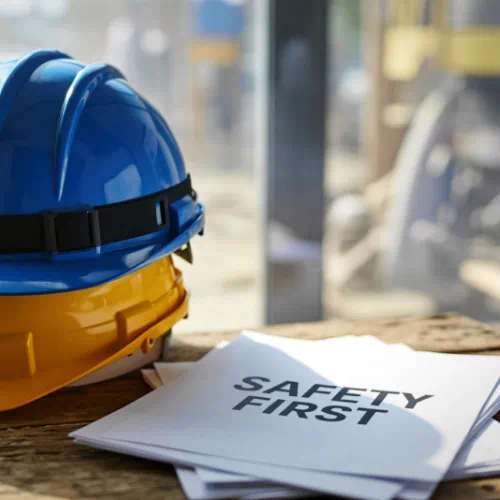
A health and safety consultant assesses your workplace, identifies risks, and helps you put the right controls in place to protect your employees and stay compliant with UK law. They can audit existing safety management systems, write or review risk assessments, and advise on training requirements relevant to your industry.
Beyond the paperwork, a good consultant will spend time on-site observing how your team actually works. That on-the-ground understanding is what separates a generic compliance document from one that reflects the real risks in your specific operation.
Do I Need a Health and Safety Consultant for My Business?
Not every business is legally required to hire an external consultant, but the Health and Safety at Work Act 1974 does require all employers to appoint a competent person to help them meet their safety obligations. For many small and medium-sized businesses, that competent person will be an external health and safety consultant rather than an in-house employee.
If your business operates in a higher-risk sector such as construction, manufacturing, or care services, the case for professional support becomes even stronger. The complexity of regulations in these industries means that specialist knowledge is often essential, not optional.
| Business Size | Recommended Consultancy Approach | Estimated Annual Cost (GBP) |
|---|---|---|
| 1 to 10 employees | Periodic reviews and on-call support | £500 to £2,000 |
| 11 to 50 employees | Quarterly audits and policy development | £2,000 to £6,000 |
| 51 to 200 employees | Retained consultant or part-time HSE advisor | £6,000 to £15,000 |
| 200+ employees | Dedicated retained service or in-house team | £15,000+ |
Need A Health and Safety Consultant? Speak with our Certified Health and Safety Consultants

What Is the Role of an HSE Consultant in Managing Workplace Risk?
An HSE consultant plays a central role in helping businesses identify hazards before they result in accidents, enforcement action, or legal claims. Their work typically includes conducting risk assessments, reviewing workplace procedures, and advising on how to comply with regulations enforced by the Health and Safety Executive.
They also act as a point of contact when businesses receive visits from HSE inspectors or need to respond to improvement or prohibition notices. Having a consultant in your corner during those situations can make a significant difference to how quickly and effectively your business responds.
Is It Mandatory to Have a Health and Safety Representative in Your Organisation?
Under UK law, employers with five or more employees must have a written health and safety policy and appoint someone with sufficient knowledge and experience to assist in meeting legal obligations. This does not have to be a paid consultant, but whoever takes on the role must genuinely understand the risks associated with your work.
Trade unions have the right to appoint safety representatives under the Safety Representatives and Safety Committees Regulations 1977, and employers must also consult employees on matters affecting their health and safety. For businesses without union representation, consulting employees directly through a health and safety committee or regular meetings is the expected approach. You can find further guidance on your legal obligations through the Health and Safety Executive’s official website.
| Industry Sector | Common Safety Risks | Typical Consultant Services Required |
|---|---|---|
| Construction | Falls from height, manual handling, plant machinery | CDM coordination, site audits, risk assessments |
| Manufacturing | Equipment hazards, noise exposure, chemical risks | COSHH assessments, machinery safety reviews |
| Retail and Hospitality | Slips and trips, fire safety, manual handling | Fire risk assessments, staff training programmes |
| Healthcare and Care | Infection control, lone working, patient handling | Policy development, staff training, compliance audits |
| Office Environments | DSE, stress and wellbeing, fire safety | DSE assessments, wellbeing frameworks, fire reviews |
For businesses unsure about their specific obligations, the UK Government’s Health and Safety guidance for employers provides a clear starting point for understanding what the law expects of you.fe working environments.
When Should You Hire a Safety Consultant to Protect Your Business?
The right time to hire a health and safety consultant is before a problem forces your hand, not after. If your business is growing, taking on new types of work, or moving into premises with different risk profiles, that is precisely the moment to seek expert input. A consultant can help you set up the right systems from the start rather than retrofitting solutions around existing problems.
There are also specific trigger points where professional support becomes particularly urgent. Receiving an improvement notice from the HSE, experiencing a reportable accident under RIDDOR, or preparing for a significant tender that requires evidence of safety management are all situations where a qualified consultant can be the difference between a smooth resolution and a serious setback.
The value of a good health and safety consultant extends well beyond avoiding fines or enforcement action. Businesses with strong safety cultures tend to have lower staff turnover, fewer insurance claims, and a better reputation with clients and contractors. Investing in professional safety support is, in most cases, one of the more straightforward ways to protect both your people and your business.
When Should You Hire a Safety Consultant: Frequently Asked Questions
The best time to hire a safety consultant is when your business is set up or when you take on your first employees, as this ensures the right systems are in place from the start. Early engagement means you build compliant procedures rather than having to correct them later under pressure.
Reputable consultants typically hold qualifications such as NEBOSH Diplomas or degrees in occupational health and safety, and many are members of professional bodies like IOSH or IIRSM. Membership of the Institution of Occupational Safety and Health is a strong indicator of professional credibility.
Day rates for experienced consultants typically range from £400 to £1,200 depending on their specialism and the complexity of your industry. Retained service arrangements are often more cost-effective for businesses that need ongoing support throughout the year.
Yes, a qualified consultant can accompany you during an HSE inspection, help you respond to inspector questions accurately, and advise on next steps if enforcement action is recommended. Their presence can reduce the risk of misunderstandings that could escalate an inspection unnecessarily.
A consultant is an external specialist engaged on a project or retained basis, while an in-house safety officer is a permanent employee dedicated to your organisation’s safety management. For more background, the Wikipedia article on occupational safety and health outlines the broader context of the profession.
Even businesses with fewer than five employees have duties under the Health and Safety at Work Act 1974, and a consultant can help them understand and meet those obligations without the cost of a full retained service. A one-off audit or risk assessment review is often sufficient for very small operations.
High-risk industries such as construction, manufacturing, healthcare, and logistics benefit most due to the complexity and volume of regulations they must comply with. That said, even office-based businesses benefit from professional guidance on areas such as display screen equipment, fire safety, and stress management.
Most businesses benefit from at least an annual review of their safety management systems, with additional input whenever there are significant changes to the workplace, workforce, or type of work being carried out. More frequent reviews are advisable in higher-risk environments or during periods of rapid growth.
RIDDOR stands for the Reporting of Injuries, Diseases and Dangerous Occurrences Regulations 2013, which requires employers to report certain workplace accidents to the HSE. A consultant can help you determine whether an incident is reportable and ensure the report is submitted correctly and on time, as detailed on the HSE RIDDOR guidance page.
Many health and safety consultants are qualified to carry out fire risk assessments, particularly for workplaces where fire poses a significant risk. For larger or more complex premises, a specialist fire risk assessor may be more appropriate depending on the nature of the building.
Look for relevant qualifications, sector-specific experience, professional body membership, and verifiable references from similar businesses. A good consultant will ask detailed questions about your operation before proposing any service, rather than offering a one-size-fits-all package.
Not necessarily. A compliance officer often has a broader remit covering legal, financial, and regulatory compliance across a business, while a health and safety consultant focuses specifically on workplace safety, risk management, and HSE compliance. The two roles can overlap depending on the size and structure of the organisation.
Yes, developing and delivering safety training is a core service offered by most consultants, covering everything from manual handling and fire awareness to more specialised topics relevant to your industry. Effective training is one of the most practical ways consultants help businesses reduce incident rates.
Failing to act on professional safety advice can expose your business to enforcement action from the HSE, civil claims from injured employees, and potential prosecution in serious cases. Beyond the legal consequences, ignoring safety guidance puts your employees at genuine risk of harm.