


Portable Appliance Testing (PAT testing) is one of those workplace obligations that often prompts more questions than answers. Business owners want to know what they’re committing to in terms of time, while employees and contractors wonder what the process actually involves. Whether you manage a small office or a large industrial site, understanding the timeline and scope of PAT testing helps you plan accordingly and stay compliant.
What Is PAT Testing and Why Does It Matter for Your Business?
PAT testing is the process of inspecting electrical appliances to ensure they are safe to use. It involves both a visual examination and a series of electrical tests carried out using specialist equipment, with the goal of identifying faults before they cause injury or damage.
The process matters because employers have a legal duty to ensure electrical equipment in the workplace is maintained in a safe condition. This obligation falls under the Electricity at Work Regulations 1989, which requires that electrical systems and equipment are used and maintained so as to prevent danger.
Need a Fixed Ladder Inspection? Talk with one of our Fixed Ladder Inspection professionals today!
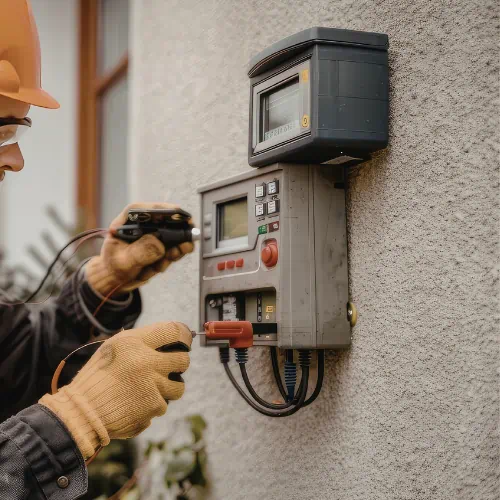
How Long Should a PAT Test Take Per Appliance?
The time required per appliance is shorter than most people expect. For a standard item such as a desktop computer, kettle, or power strip, the entire process typically takes between two and five minutes.
More complex or larger appliances naturally take longer. An industrial power tool or a three-phase piece of equipment might require ten to fifteen minutes to test thoroughly, particularly when the visual inspection reveals areas that need closer attention before the electrical tests can even begin.
| Appliance Type | Estimated Test Time |
|---|---|
| Standard office equipment (PC, monitor) | 2 to 4 minutes |
| Kitchen appliances (kettle, toaster) | 2 to 3 minutes |
| Power tools (handheld) | 4 to 6 minutes |
| Extension leads and multi-plug adaptors | 3 to 5 minutes |
| Industrial or three-phase equipment | 10 to 15 minutes |
| IT server equipment | 5 to 10 minutes |
How Long Does a PAT Test Take for an Entire Site?
The total duration for a full site PAT test depends almost entirely on the volume and variety of appliances present. A small office with thirty to fifty items might be completed in two to three hours, while a large warehouse or commercial kitchen with hundreds of appliances could take a full day or more.
Access also plays a significant role in overall timing. If appliances are spread across multiple floors, locked rooms require coordination, or equipment needs to be powered down and moved before testing, the job takes considerably longer. A competent tester will factor all of this in when providing an estimate ahead of the booking.
What Would Fail a PAT Test?
Understanding what causes a failure helps businesses prepare their appliances in advance and avoid unnecessary remedial costs. The most common causes of failure include damaged cables, faulty plugs, inadequate insulation resistance, and equipment that has been visibly modified or repaired improperly.
A visual inspection alone can flag the majority of issues before the electrical tests even begin. Frayed wires, cracked casings, burn marks, and signs of water ingress are all immediate red flags. Electrically, a failure is typically recorded when the earth continuity, insulation resistance, or leakage current readings fall outside the acceptable thresholds set in the IET Code of Practice.
| Common Failure Reason | Type of Check |
|---|---|
| Damaged or frayed cable | Visual inspection |
| Cracked or broken plug casing | Visual inspection |
| Failed insulation resistance reading | Electrical test |
| Poor earth continuity | Electrical test |
| Signs of overheating or burn marks | Visual inspection |
| Water damage or ingress | Visual inspection |
| Incorrect fuse fitted | Visual inspection |
| Failed leakage current test | Electrical test |
How Difficult Is the PAT Testing Process?
PAT testing is not considered a highly complex skill, but it does require a working understanding of electrical safety principles and the ability to interpret test results accurately. The HSE guidance makes clear that testing should be carried out by a “competent person,” which refers to someone with sufficient knowledge, training, and experience to carry out the work safely.
For those pursuing formal training, a number of accredited PAT testing courses are available that can be completed in as little as one day. These courses cover the visual inspection process, how to operate a PAT testing device, and how to record and interpret results. While no formal qualification is legally required, completing a recognised course significantly reduces the risk of misinterpretation and incorrect pass or fail decisions.
For further guidance on electrical safety requirements in the workplace, the Health and Safety Executive provides detailed FAQs on PAT testing obligations, frequency, and what constitutes competence.
Want a Fixed Ladder Inspection? Speak to one of our Fixed Ladder Inspection Experts
How Much Do PAT Testers Get Paid in the UK?
PAT testing as a profession sits within the broader electrical and compliance services sector, and pay varies depending on whether the individual is employed, self-employed, or running their own testing business. An employed PAT tester in the UK typically earns between £22,000 and £30,000 per year, depending on experience and region.
Self-employed testers often charge per item tested, with rates ranging from 50p to £2.50 per appliance depending on the contract size and location. Those who build a client base and operate efficiently across multiple sites can earn considerably more, particularly in high-demand areas such as London and the South East. According to data from the Office for National Statistics, trades and technical inspection roles have seen consistent wage growth in recent years, reflecting increased demand for compliance services across UK businesses.
How Long Does a PAT Test Take: What Every Business Owner Should Know
Understanding how long a PAT test takes is not just about scheduling convenience; it is about managing your compliance obligations with clarity and confidence. The time investment per device is minimal, but the cumulative duration for a full site test requires proper planning, particularly in larger premises where appliance volumes are high. Working with an experienced tester who can provide a realistic time estimate before the job begins makes the entire process smoother.
The difficulty of the test itself should not be a deterrent for businesses considering training an in-house member of staff to handle smaller portfolios of appliances. With the right one-day course and a quality PAT testing device, a competent employee can manage routine testing effectively. That said, for complex equipment or larger sites, engaging a professional contractor remains the most reliable route.
Ultimately, PAT testing is a proportionate and manageable process when approached with the right information. Knowing what causes failures, how long each appliance takes, and what qualifications testers hold allows business owners to make confident decisions about how to manage their electrical safety obligations year on year.
How Long Does a PAT Test Take: Frequently Asked Questions
PAT testing itself is not explicitly required by law, but the Electricity at Work Regulations 1989 does require that electrical equipment is maintained in a safe condition. Regular PAT testing is the most widely accepted method of demonstrating compliance with this duty.
The recommended frequency depends on the type of environment and the class of appliance being used. High-risk environments such as construction sites may require testing every three months, while lower-risk office environments might only need testing every four years for certain equipment.
Yes, provided you are a competent person with sufficient knowledge and experience of electrical safety to carry out the testing accurately. Many businesses train an in-house member of staff by completing a one-day accredited PAT testing course.
PAT stands for Portable Appliance Testing, a process used to check that electrical appliances are safe to use. For a broader explanation of the term and its history, the Wikipedia page on Portable Appliance Testing provides a useful overview.
New appliances from reputable manufacturers should already meet safety standards, but they can still be included in your testing schedule as a precaution. Some workplaces choose to inspect new items visually before use without carrying out a full electrical test immediately.
Class I appliances rely on an earth connection as a safety measure and require both earth continuity and insulation resistance testing. Class II appliances (also known as double insulated) do not have an earth connection and therefore require a different set of tests focused primarily on insulation resistance.
A failed appliance should be removed from use immediately and labelled clearly to prevent others from using it. It should then either be repaired by a competent person and retested, or disposed of safely if it cannot be economically or practically fixed.
Yes, PAT testing applies to portable and moveable appliances such as kettles, computers, and power tools. A fixed wire electrical inspection, carried out by a qualified electrician, covers the fixed wiring installation of a building and is a separate obligation entirely.
You should retain a register of all appliances tested, the results of each test, the date of testing, and the name of the tester. The Health and Safety Executive advises that keeping clear records helps demonstrate ongoing compliance and supports risk management processes.
Yes, extension leads and multi-plug adaptors are among the most commonly tested items and also among the most frequently failed. They are subject to heavy use and physical stress, making regular inspection particularly important.
After testing, each appliance is typically given a pass or fail label showing the test date and the date of the next recommended test. The tester also produces a written or digital register documenting all results, which the business retains as part of its health and safety records.
Most PAT tests require the appliance to be switched off and unplugged during testing, which means a brief period of downtime for each item. A well-organised tester will work systematically through a site to minimise disruption, often scheduling visits outside core business hours where needed.
There is no single mandatory qualification, but reputable testers typically hold a City and Guilds 2377 certificate or equivalent from a recognised body such as the EAL or IET. Membership of a professional association and appropriate liability insurance are also signs of a credible contractor.
Costs vary depending on the number of appliances, the location, and the complexity of the site, but most contractors charge between 50p and £2.50 per item for volume testing contracts. Some companies charge a call-out fee on top, so it is worth requesting a fully itemised quote before confirming a booking.